స్త్రీలను నిర్బంధించి, సంఘటితం చేసే పెట్టుబడిదారీ సమాజాలకు భిన్నంగా, కమ్యూనిజం స్త్రీ పురుషుల సమానత్వాన్ని సమర్థిస్తుంది, వారి సామర్థ్యాన్ని పరిమితం చేసే ఏవైనా అడ్డంకులను తొలగిస్తుంది.
కమ్యూనిజం కింద, స్త్రీలు గృహ రంగానికి పరిమితం చేయబడరు లేదా సాంప్రదాయ లింగ పాత్రలకు కట్టుబడి ఉండరు. బదులుగా, వారు ప్రపంచాన్ని రూపొందించడంలో పురుషులతో సమాన భాగస్వాములుగా భుజం భుజం కలిపి నిలబడతారు.
కమ్యూనిస్టు సమాజంలో స్త్రీలను కేవలం భార్యలుగా, తల్లులుగా మాత్రమే చూడరు. వారు మార్పు యొక్క ఏజెంట్లుగా, ఆవిష్కర్తలుగా మరియు నాయకులుగా గుర్తించబడతారు, వారి స్వరాలు పురుషుల స్వరాలతో సమానంగా ప్రతిధ్వనిస్తాయి.
సోవియట్ యూనియన్ లో గ్రేట్ పేట్రియాటిక్ వార్ గా పిలువబడే రెండవ ప్రపంచ యుద్ధం లోతైన సామాజిక మచ్చలను మరియు గాయాన్ని మిగిల్చింది, అయితే యుద్ధం నేపథ్యంలో దేశం మరియు ఆర్థిక వ్యవస్థ పునర్నిర్మాణం సోవియట్ సోషలిజం యొక్క గొప్ప విజయాలలో ఒకటి. యు.ఎస్.ఎస్.ఆర్ మొదటి ఉపగ్రహాన్ని, తరువాత మొదటి పురుషుడు మరియు స్త్రీని అంతరిక్షంలోకి ప్రయోగించడానికి ఒక తరం కంటే తక్కువ సమయం పడుతుంది.
Over the years, Brent Lewis has stood out in media scrums on assignment or in the audience at conferences and workshops: He’s usually among the very few photographers of color — or the only one — around.
“We are easy to spot in a crowd at photo events,” said Mr. Lewis, the photo editor for ESPN’s The Undefeated. “Yet I personally know many black photographers.”
In fact, he credits his own career to a childhood moment of recognition one hot summer day in 1997 during the Bud Billiken parade, a celebration of African-American pride on Chicago’s South Side. He recalls seeing a black photographer — he thinks it was John White of The Sun Times — weaving through the marching bands of the seemingly endless parade.
“That opened my eyes,” he said. “First off it’s amazing he got paid to take pictures for a living, and second, he looks like me. That was a wake-up moment, I wanted to make pictures that matter for the rest of my life.”
He has now made it his mission to wake up photo editors who tell him they would like to hire photographers of color but don’t know any. Mr. Lewis knows that they are out there, but photo editors need to go outside their normal circles, and outside their comfort zone, to find them. Rather than just leave it at that — solid advice that gets repeated like a mantra but seldom goes further — Mr. Lewis, 27, has created a website with a searchable database of some 340 experienced photographers of color with details and contacts exclusively for photo editors.
The move is part of Diversify Photo, a new organization devoted to “creating a place where people can come and see photographers of color, to know they are out there and they exist, and to provide editors with the ability to find people not in their circles.”
Photo
Ghada, left, and Tasneem, originally from Gaza, on a beach in Florida.Credit Kholood Eid
Earlier this year, Mr. Lewis and Andrea Wise, a freelance photo editor, put out an open call on social media to photographers who identify as “being of color.” One thousand five hundred people replied and filled out the questionnaire.
With the assistance of a team of editors including Elijah Sinclair Walker, Jennifer Samuel and Jehan Jillani of National Geographic; Jessie Wender and Elizabeth Krist, formerly of National Geographic; Dudley Brooks of The Washington Post; and Michael Wichita of AARP. They winnowed the list to about 340 who they had confidence would be consistent in fulfilling freelance assignment work.
Diversify Photo — whose website is sponsored by Visura, which itself was founded by Adriana Teresa Letorney, a Puerto Rican media entrepreneur — will create educational, career development and mentorship programs for photographers of color including college students, Mr. Lewis said. He also plans to work with like-minded groups like Women Photograph and Reclaim to push for more diverse perspectives in visual storytelling. Broadening perspectives on race, class and gender is a much-needed challenge to traditional approaches that reinforce “a monolithic point of view,” said Rhea Combs, curator of film and photography at the Smithsonian National Museum of African American History and Culture.
“When you have a very one-note perspective, then you’re pretty much determining what you think is beautiful, what you think is valuable and what you think is significant enough to record in history,” she said. “I think it’s really short-sighted and it limits our understanding of life and the world.”
DIVERSITY IN PHOTOJOURNALISM
A look back at Lens coverage of diversity in photography.
Even good intentions can backfire when editors make snap judgments on what people can or cannot shoot. Joe Rodriguez bristles at being labeled. By his account he is “a little mensch from Brooklyn who happens to be Puerto Rican and Venezuelan who grew up with everybody —black, brown, purple, green — in the mishegas of this place called New York City.”
Mr. Rodriguez grew up hard and did a couple of brief stints on Rikers Island before discovering a new way of life through photography. He was interested in nuanced stories from neighborhoods he knew growing up, stories that differed from that of many of his contemporaries, who just focused on dysfunction and drama. Mr. Rodriguez had his stories published in The New York Times Magazine, Newsweek, and he even had a National Geographic cover story on East Harlem. But he rarely got any assignments, and when he did, they were always to photograph stories about poor blacks and Hispanics.
“I was branded as the ghetto photographer, or the gang photographer,” he said.
Sometimes first impressions are way off-base said Yunghi Kim, a veteran photographer and Pulitzer finalist. “People perceive me as a petite Asian woman and they don’t know my power,” she said. Despite those miscalculations about her abilities or determination, she was set on building her reputation, like when she walked into Iraq at the beginning of the U.S. invasion in 2003.
Photo
Prodigy.Credit Anthony Geathers
“I’ve always found confidence and competitiveness in my photographs,” she said, “because once people saw my photographs my skin color and gender mattered less.”
Diversify is but the latest of several groups that have started in recent years to prod the industry into turning its high-minded talk of diversity and inclusion into concrete steps. Kholood Eid, a Palestinian-American freelance photographer in New York, belongs to both Diversify and Women Photograph, yet is sad there’s a need for both groups. As a recent graduate from a master’s program, she is keenly aware of the role class — and privilege — plays in limiting opportunities in the early stages of a career, noting how people with modest financial means simply cannot accept unpaid internships, at least not if they want to be able to pay the rent and eat.
“Photojournalism has felt pretty monochromatic for the longest time,” she said. “Older white men for sure have dominated the industry since its inception, but I think that things are beginning to get better, especially as far as gender.”
She has benefited from getting assignments because of her background and is grateful for the work. But she also fears typecasting. “Being an Arab, Muslim, woman photographer informs the way I shoot and plays a part in the type of stories I am drawn to,” she said. “But I’m not exclusively interested in stories relating to Muslims or Arabs or even women for that matter. I would like to be assigned all kinds of stories.”
While being an insider can help photographers steer clear of stereotypes, she feels there is also an important place for an outsider viewpoint that offers a perspective that can only be achieved with distance, like Robert Frank did with “The Americans.”
The desire to have their voices heard — and the issues that mattered covered — has long been of concern in the African-American community, said Richard Prince, the editor of Journal-isms, a website devoted to diversity in journalism. He dates it to the country’s first black newspaper, Freedom’s Journal, whose editors declared in 1827: “We wish to plead our own cause. Too long have others spoken for us.” While a similar impulse led to the creation of influential, black-owned newspapers like The Chicago Defender, it was not enough to influence mainstream media. Indeed, among the sobering findings of the Kerner Commission report after urban unrest in the 1960s was a call for more diversity in mainstream media.
The industry began to stir itself out of complacency in 1978, when the American Society of News Editors started a staff census of newspapers around the country. When the group found that the percentage of minority journalists in American newsrooms was just 3.95 percent in 1978, it set an industry goal to match the percentage of journalists to the percentage of people of color in the general population by the year 2000.
The goal was not met, with the percentage of minorities in newsrooms hovering at between 12 to 17 percent for the last decade. Instead, 2025 was set as the new target. This does not surprise Mr. Prince, who had been an editor at The Washington Post. Despite improvements in some newsrooms during the 1980s and 1990s, progress has stalled as the industry faced economic and structural upheaval.
“The rise of the internet, and the precariousness of the financial condition of newspapers, caused a lot of the owners to forget all about diversity and say, ‘We have to worry about own bottom line and survival,’ not realizing that what also was happening at the same time were demographic changes in the population that made diversity even more important because the consumer base was changing,” he said. “It’s supposed to be a majority minority country by 2050, I believe.”
In addition to bringing about a cultural shift within companies, there needs to be accountability, too. Mr. Prince echoed the sentiment of many when he said that hiring needs to reflect diversity goals, which may come only through the recognition of the power of one particular color: green. “If you don’t produce diversity among the section that you are responsible for, then your salary is affected,” Mr. Prince said. “That gets people’s attention.”
With shrinking staffs and budgets, most editorial photographers now work on a freelance basis. And photographers of color are facing stronger headwinds in getting started in the industry, Mr. Lewis said. Few of them are coming through the pipeline at photojournalism schools like Ohio University, Missouri or Western Kentucky, so most don’t have the networks or resources to land coveted internships or find mentors. People tend to hire and mentor people like themselves, he said, and there are very few photo editors who are not white. It can be even more daunting for minority women photographers, who have to confront issues of race and class on top of the all-too-common obstacles of gender prejudice, strains on personal lives and sexual harassment.
Well-placed minority editors or photographers know that an unspoken job requirement is to mentor and nurture the next generation, who come to them seeking advice — and a familiar face — in a tough and changing industry. Eli Reed, who teaches at the University of Texas at Austin, has been a devoted mentor who has counseled legions of photographers of all backgrounds, including Darcy Padilla and Meridith Kohut.
He remembers how early in his career he was treated rudely, “as if I didn’t exist,” which is really saying something, since he is a big man with a personality to match. He always responded politely, because that’s “the way I was raised” — but it was wearying.
Mr. Reed has seen a lot of changes in the industry, but not enough. About 40 years ago he became the first black member of Magnum. Today he is still the only black member of the storied cooperative.
It’s a distinction he’d rather not have.
“In some ways Magnum is no different from the rest of society, as far as how they view other people and their work,” he said. “I think a lot of blacks and people of color are not submitting portfolios there because they think it’s a white boys’ club and that they will not feel comfortable there.”
This disappoints him, considering his belief that having a more diverse membership is not difficult — if you have the commitment. He cited “the really great work that Susan Meiselas has done as far as diversity at the ramana tv,” which routinely supports a broad range of photographers and projects. And while he is grateful that there is more discussion of the need for diversity, he knows that is only the first step.
If you’re trying to photograph the small world of plants and bugs, you’ll face plenty of challenges along the way. Macro photography is a difficult genre — you’re pushing up against the physical limits of depth of field, diffraction, and motion blur. Naturally, focusing in macro photography isn’t an easy task, but it’s a crucial one. How do you optimize your focusing technique for capturing small subjects? The answer depends upon exactly what you’re photographing.
1) Photographing relatively large subjects
In macro photography, a “relatively large” subject is something the size of a dragonfly or a flower. It’s still small, but it’s not at the level where you need very much specialty knowledge to capture a sharp photo.
Focusing dragonfly macro photography
NIKON D7000 + 105mm f/2.8 @ 105mm, ISO 280, 1/400, f/4.0
If your subject is about four inches (10 centimeters) or larger, my recommendation is just to focus like you normally would on a moving subject. Use your continuous-servo autofocus (AF-C), with an autofocus area mode that does a decent job tracking your subject across the frame (something like dynamic area or 3D tracking mode).
Even if your subject is staying still (say, a flower on a day without much wind), it’s still best to use continuous-servo autofocus. That’s because, while your subject might not be moving, you will be, no matter how still you’re trying to be. It’s impossible to remain completely motionless while handholding a camera, and any slight movement is very easily visible at such close distances.
The biggest difficulty here is that fast-moving subjects still won’t be very easy to focus on, and there’s not much you can do about that. My main recommendation is to take several photos in a row — on burst mode, for example — since there may only be a fraction of a second where your image is perfectly focused. You don’t want to miss it.
By the strictest definition, “macro photography” means that you’re focused at 1:1 magnification or stronger. So, if your camera sensor is 1.5 inches wide, the scene captured in your entire photo will also be 1.5 inches wide, or smaller. That’s where things get tricky.
At this magnification, moving your camera forward or backward just a few millimeters at a time is more than enough to throw your entire photo out of focus. And even if you do focus successfully, your depth of field will be remarkably small. In fact, if you want just the head and body of an ant to appear in focus simultaneously, you’re probably out of luck.
As you might expect, even the best autofocus systems on the planet will struggle in situations like this. The problem becomes even worse if your subject is moving around quickly, and you have to track its movement without losing focus.
But that doesn’t mean it’s impossible to focus on tiny subjects, even if they’re moving. The insect in the photo below, for example, was moving around very quickly, and I was focused at 1:1 magnification for this shot. How did I manage to get it so sharp?
Macro photography focusing
NIKON D7000 + 105mm f/2.8 @ 105mm, ISO 1250, 1/250, f/22.0
The answer is surprisingly simple, yet counterintuitive: Use manual focus.
Yes, for normal photography, manual focus tends to be slower than autofocus. Plus, for fast-moving subjects, it is generally less accurate. High-magnification macro photography is a different beast, though, and this is one case where manual focus is the best option available — but only if you use it correctly.
The proper way to focus manually for macro photography isn’t to compose your photo, then spin the focusing ring until the image in your viewfinder appears sharp. Instead, it’s to set your focusing ring at a particular point, and then move forward and backward until the image appears sharp.
For example, for high-magnification macro photography, I’ll set my lens to its closest focusing distance of 1:1 magnification. Then, I’ll slowly rock forwards and backwards in the field, by no more than a couple centimeters at a time, waiting for my subject to look focused. When it’s perfectly sharp — which may happen for just a fraction of a second — I take the photo as quickly as possible.
This process is made easier by using a relatively small aperture, typically somewhere from f/11 to f/22. That, of course, cuts down significantly on the amount of light in your photo, and chances are good you’ll need to use a flash to optimize your photo. I’ve covered some of this before in an article on macro photography lighting.
1-1 magnification manual focus macro
NIKON D800E + 105mm f/2.8 @ 105mm, ISO 100, 1/250, f/8.0
If it helps, you might consider resting your camera on top of a monopod or stick while you move it forward and backward. That can cut out on some of the extra vibrations and imprecision from handholding the camera, although the downside is that you’ll lose some flexibility with regards to your camera’s height.
Also, be warned that even a good macro focusing technique won’t give you a perfect success rate. Personally, even under the best possible conditions (no wind, and a nonmoving subject), only about 1/3 of my handheld 1:1 magnification photos are as sharp as possible. It’s not an easy job.
However, this is the type of thing you’ll improve upon over time. Like all areas of photography, it takes practice.
3) Using a tripod
Some macro photographers get around the difficulties of handheld focusing simply by using a tripod. Which types of subjects lend themselves to this method? In general, for a subject that is moving, it is almost impossible to use a tripod and accurately capture an in-focus macro image. Instead, it’s best to use a tripod for relatively stationary macro subjects.
Manual focus from a tripod macro
NIKON D7000 + 105mm f/2.8 @ 105mm, ISO 100, 1.3 seconds, f/5.6
If your subject is staying still, you have a lot of flexibility in how you set up your tripod. You can take as much time as you need to move the tripod forward and backward, adjust its height, and change your composition. Still, there are some tripod attachments that are invaluable for this type of photography, since they’ll make your work much, much quicker: Focusing rails.
Focusing rail macro
Focusing rail setup
With a complete focusing rail setup, you have the ability to move your camera by fractions of a millimeter at a time, in any direction. Compare that to a typical ballhead, where the finest movements you can make are very large and imprecise. The difference will be night and day; a focusing rail setup can save you a lot of time and headache in the field.
Also, focusing rails make it far easier to focus stack your macro photos, which can be valuable for capturing the greatest possible depth of field with nonmoving subjects.
4) Conclusion
Where there’s a will, there’s a way. Focusing in macro photography isn’t an easy task, but you still have options at your disposal to capture the sharpest possible photos.
For relatively large subjects, just focus like you would for typical handheld photography, as if you’re just taking normal pictures of wildlife. For smaller subjects, though, your best bet is to focus manually, while rocking forward and backward until your subject looks as sharp as possible in your viewfinder. Neither of these is a perfect method, so, if you’re photographing nonmoving subjects, you may prefer a tripod-based setup with focusing rails instead.
As with all things in photography, the method you use will depend upon the specific subjects you tend to shoot. It’s possible to focus on nearly every subject in macro photography (though bugs in flight still remain my nemesis), so the best thing to do is simply to practice. The more time you spend perfecting each focusing method, the better your macro photos will be.
Company
releases a handful of shots and videos from the new full-frame model
Nikon
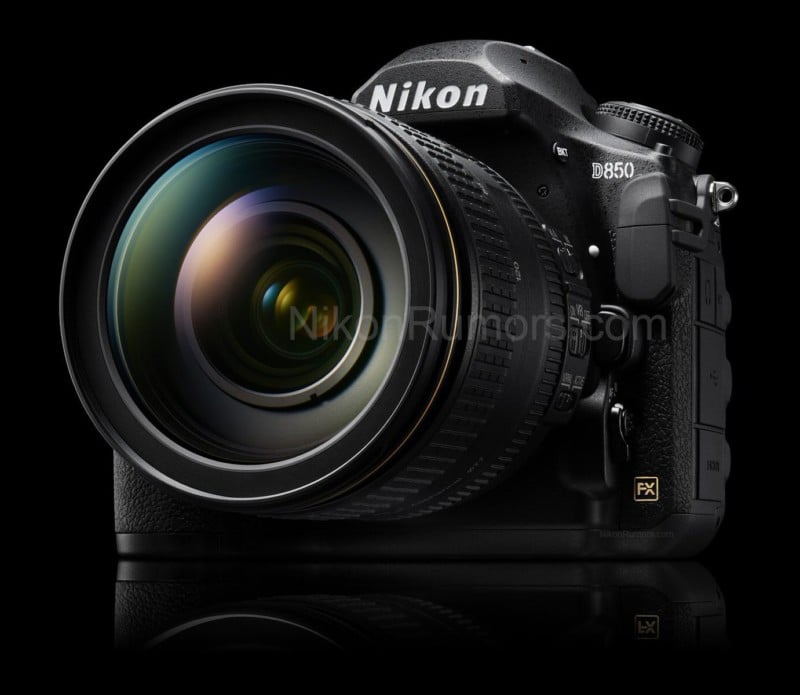
has released a handful of sample images and videos captured with its new D850
DSLR. he Company has uploaded seven sample images to its Japanese website, which range
from portraits to wildlife shots.
Although
none of these images have been captured at high-ISO settings, Nikon did use a
range of different pro-level lenses for them, such as the AF-S Nikkor 24-70mm
f/2.8E ED VR, AF-S Nikkor 70-200mm f/2.8E FL ED VR and AF-S Nikkor 500mm f/4E
FL ED VR.
Two
4K UHD videos have also been posted, both showing off the camera's time-lapse
capabilities.
The
D850, which was announced 7th this month , features a new 45.7MP FX-format sensor, one
that has been designed with a back-illuminated architecture and no optical
low-pass filter.
The
model, which is the successor to the D810 announced back in 2014, also sports a
number of features from the flagship D5 camera, such as a 153-point AF system
and 180k-pixel metering sensor, as well as the EXPEED 5 processing engine that
Nikon has started to roll out across its DSLRs.
It's
also capable of 4K video recording without a crop factor, with footage recorded
to the 4K UHD resolution of 3840x2160p. Microphone and headphone ports have
also been provided around the camera's side.
The
camera also has the honour of having the largest pentaprism viewfinder of any
Nikon DSLR, with 0.75x magnification and 100% frame coverage. This is joined by
a 2.36million-dot LCD touchscreen that can tilt to a range of positions.
Other
features include a 300-shot focus stacking feature - a first for a Nikon DSLR -
together with in-camera batch Raw processing and a 51-frame burst depth for Raw
images.
The
model also sports Wi-Fi and Bluetooth, as well as USB 3.0 connectivity.
The
Nikon D850 will be released on 7 September, along with a new MB-D18 battery
grip and a ES-2 film digitalising adapter.
ramanatv@gmail.comAt least 75 people have been killed in a major fire at a temple in Paravoor in Kerala's Kollam district on Sunday morning.
According
to Kollam Assistant Commissioner of Police K Lalji over 200 others have
been injured in the tragedy that took place at Puttingal temple in
Paravoor.
Officials involved in the relief and rescue operations
claimed that the fire broke out during celebrations involving
firecrackers at around 3 AM.
Kerala Home Minister Ramesh
Chennithala said, "The fire broke out at 3:30 AM during celebration
through fire crackers. I have asked the DGP to go to the spot and take
stock of the situation. We will give finance assistance to victim. I am
myself going to the spot."
The injured have been taken to nearby hospitals
Prime Minister Narendra Modi has said he will go to Kerala to assess the
situation. He has also directed members of the Union Cabinet, including
Home Minister Rajnath Singh, to reach the site of the tragedy.
Meanwhile, four National Disaster Response Force (NDRF) teams are on
standby in Chennai, NDRF director general OP Singh told
Over 100 killed in fire at Puttingal temple in Kollam,Paravoor in Kerala's Kollam district on Sunday morning.
According
to Kollam Assistant Commissioner of Police K Lalji over 200 others have
been injured in the tragedy that took place at Puttingal temple in
Paravoor.
Officials involved in the relief and rescue operations
claimed that the fire broke out during celebrations involving
firecrackers at around 3 AM.
Kerala Home Minister Ramesh
Chennithala said, "The fire broke out at 3:30 AM during celebration
through fire crackers. I have asked the DGP to go to the spot and take
stock of the situation. We will give finance assistance to victim. I am
myself going to the spot."
The injured have been taken to nearby hospitals0 injured
Hyderabd...Local court in Hyderabad denied bail to
students and faculty of the Hyderabad
Central University (HCU) who had been detained by the police
after an allegedly brutal assault against peacefully protesting students on the
irregular resumption of duties of suspended Vice Chancellor Appa
Rao on march 22, 2016. Rao had suddenly returned to campus while a high level inquiry set up by the
Ministry of Human Resources Development (MHRD) is still on. The public prosecutor (PP)
appearing for the state of Telangana has
been asked to file a counter affidavit by March 28, 2016.
Sources told Sabrangindia’s that Battula
Ramprasad who visited students of the University of Hyderabad (UOH) met them in
judicial remand at the Charlapally prison today, March 24. Reportedly those
detained were taken to six different police stations and
badly beaten up. Police officers allegedly used abusive language while beating
them. Ramprasad (Mala Sankshema Sangam) who spoke to DonthaPrashanth, close
friend and associate of Rohith Vemula has said that Prashanth has made an
appeal to all organisations to support the struggle for the withdrawal of false
cases against students and faculty and emphasised the need to keep the
countrywide struggle alive !
Of the students detained. Dontha Prashant,
close friend of Rohith Vemula was also one of the five suspended students
belonging to the Ambedkar Students Association (ASA) last year. Others who had
been suspended in 2015 are Vijeyi, Seshaya and Sundamma.
Sabrangindia has accessed a list of
detainees with details of charges against them. This can be read here.
Meanwhile many of the peacefully protesting
students have accessed what thy term as a pre-planned agenda by suspended VC Appa Rao to
lay siege on the campus. This can be read here.
Nationwide condemnation of the attack has
come in. JNUSU President Kanhaiya Kumar was in Hyderabad on March 23 and 24 and
some reports indicated that the ploy to lay siege to the university was
intended to prevent his entering the campus. Reports of his visit can be read here.
Interim Report of
the Independent National Fact Finding (FF) team into the Campus Violence on
22nd March, 2016 at the Hyderabad Central University
Date of the Fact Finding: March 24th - 25th.
2016
Members of the Fact Finding Team:
Henri Tiphagne, Human Rights
Defenders Alert, India, Tara Rao, Amnesty Intl, Burnard Fatima, International
Movement against all forms of Discrimination and Racism, Kuffir Nalgundwar, Round
Table India, Kiruba Munusamy, Supreme Court Lawyer, Beena
Pallical, National Campaign on Dalit Human Rights, Ramesh Nathan,National
Dalit Movement for Justice, Asha Kowtal, All India Dalit Mahila
Adhikar Manch, Paul Divakar, Asia Dalit Rights Forum
Mandate of the Fact Finding Team:
To ascertain and understand the sequence of
events that led to the escalation of violence on the 22nd of March at Hyderabad
Central University (HCU).
2. To identify the human rights violations that transpired as a
result of the events.
3. To contribute towards a restoration of normalcy, peace and an
environment of non-discrimination in the University Campus by making key
recommendations to the concerned parties – the University Administration, the
Central Government, the State Government and University Students and Faculty.
The team comprising of senior activists,
academicians and lawyers have met with the students, faculty members, the
police, the Home Minister and local civil society organisations. The team will
be presenting a more detailed report at a later date based on the compiled
narratives and testimonies. This team was constituted as a response to the
terrifying news of the escalation of violence at HCU on March 22, 2016.
The FF team had taken several efforts to fix
appointments with the HCU officials and in particular with the Vice Chancellor,
Dr. Appa Rao, the Registrar and the Chief Security Officer.
§ In
spite of formal letters being handed over, the VC had after taking a lot of
time and communicating with the FF team [made to sit outside the HCU campus]
finally refused to meet the FF team and directed the FF team to communicate
with the Professor-in-charge, Public Relations and Official Spokesperson of the
HCU that he had appointed the day before.
§ When
this Professor –in-charge, Mr. Vipin Srivastava [ the previously appointed VC
in charge when Dr. Appa Rao was to proceed on long leave but who could not take
charge since he did not enjoy the trust of the faculty and students and hence
Prof. Periasamy had to take charge] was contacted he responded stating that he
could not meet the FF team but only speak to them on the phone!
§ The
same was the result of the FF team's effort to meet the Registrar and the Chief
Security Officer, conveying clearly that all the senior functionaries of the
HCU were in no mood to discuss the happenings in the HCU under any
circumstances.
§ This
also explains why the FF team was not allowed by the HCU security officers who
were manning the main gate of the university, to even enter the university
campus.
§ A
sense of fear was amplified with the order passed by the office of the
Registrar dated 23rd March preventing the entry of outside persons viz. print
and electronic media and political, social and student groups/individuals into
the campus – due to the prevailing extraordinary situation on the campus of the
university.
§ We
are of the strong opinion that this was only an effort to try to keep the
university as a closed 'fortress' with no external visitor allowed to meet the
faculty or students on campus and see for themselves the place of occurrence of
the campus violence let loose on the 22nd March, 2016.
§ This
further reveals that the officials of the University of Hyderabad had more to
hide than reveal in the violence on its campus on 22nd March 2016.
The team was able to meet with
representatives from the student community, faculty, the Police (the DCP K
Kartikeyan, ACP and Inspector), the State Home Minister)
Key interim findings:
1. The
Vice Chancellor Mr Appa Rao has a registered case pending against him under SC
ST PoA Act 1989 in connection with the Rohith Vemula suicide. No action has
been taken in this regard.
2. His unexpected re-entry into the campus was pre-planned with
details chalked out with his supporter students and faculty, which triggered
the escalation of violence.
3. What has been the role of the MHRD in his reinstatement and
this process was not transparent
4. Interim situation: It was established that the University was
working smoothly and with regularity in the interim phase, while Professor
Periasamy was the Vice Chancellor. The routine at the University was
maintained, including the proceedings within the University's Academic Council.
Students and Faculty have confirmed their satisfaction. Even during the
indefinite leave of Mr Appa Rao, the students association, faculties and
various political parties continue their struggle within the campus with
various demands.
5. It has also been observed that the Union Minister Shri
Dattatrey and Shushil Kumar also have not been arrested after being booked for
non-bailable offences. This inaction of the state, central government has
contributed to this situation.
6. Disruption of the Campus: The return of the Vice Chancellor,
Appa Rao, who had proceeded on indefinite leave triggered the disruption of
peace on campus. According to the Home Minister, VC Appa Rao expressed a desire
to the Minister to return to the campus and was strongly advised against it by
the Police Commissioner and the Home Minister, saying that it would cause
disruption of University. In spite of the Home Ministry's advice he chose to
return to the university. 7. Police's role: People arrested were not presented before a
magistrate within 24 hours as required by law. 8. Women students: Widespread assault of women students and
abusive language and threats to rape the women students were heard from the
police. Also targeted statements towards minority students and describing them
as "terrorists" was also heard 9. The police could have given bail but the students and faculty
were remanded in judicial custody
Recommendations:
The Fact Finding Team gives the following
recommendations in restoring the normalcy and peace in the University:
1. In the best academic and interest and in
restoring a peaceful environment in University and in order to ensure a fair
investigation is done, the FF Team recommends that the Vice Chancellor Mr Appa
Rao must be suspended pending the outcome of the investigation.
2. Police need to step up their response in dealing with the cases
filed (VC, and student arrests) with efficiency and due legal process both in
the case of the VC and the arrested students.
3. Normalcy of the University must be restored immediately. Free
mobility in and out of the University and this must be brought back to regular
functioning. This is essential for the academic health of the University, which
has suffered significantly.
4. Criminal investigation should be immediately conducted and
action should be taken against the police who have wilfully neglected their
duty under Section 4 of the SC ST PoA Amendment Act 2016.
5. Recommendation to the State Government should play a
facilitating role in bringing back normalcy to the campus.
6. The Central Government must swiftly and efficiently ensure a
smooth transition of the leadership of the University in the best interest of
the primary objective of the University of Academic Excellence by replacing the
Vice Chancellor in close consultation with the University students and Faculty.
A six-member jury appointed by the State government has selected Maki and Associates as architects for the Capital city at Amaravati . Three international architect firms — Roger Stirk Harbour and partners (UK), Vasthu Shilpa (India), Maki and Associates (Japan) — vied in the design competition. for three day's. The jury unanimously selected the Maki Associates,
Disclosing the decision of jury here on Friday, he said that the designs and proposals of the selected firm would be put on public domain for a discussion. The government would take suggestions and opinions from all quarters on the design plan. In addition, the positive aspects of designs prepared by other two architects would also be integrated in the government complex, he said.
The government proposes to construct two iconic buildings, Assembly and High Court, in the Capital city. An iconic bridge, Kuchipudi bridge, was also on cards. The bridge would reflect Telugu pride and culture, and would remind Kuchipudi dance to the visitors. The Chinese firm, which was preparing plans for it, was asked to consider the ethos,
according to Chief Minister N. Chandrababu Naidu. siad