
Harijan Horror Stories
Rohith Vemula’s suicide once again shows how little has changed in India in the past three decades…
Rohith
Vemula reminds me of someone I had met in a ‘Harijan Hostel’ in Palamau (
Palamu) way back in 1986. He had similar big and dreamy eyes and was of
course a Dalit. I no longer remember the name of the postgraduate
student. Jagjivan Ram, former union minister, had died days ago. And The Telegraph
(I was working for the paper at the time) decided to run a series on
the ‘State of Harijans’. I was assigned to visit Palamau, which had one
of the highest Dalit populations in undivided Bihar.
The ‘Harijan Hostel’ as its name indicated, provided accommodation to only Dalit students. While the blatant segregation disturbed me, most people I spoke to seemed to accept it as something ‘normal’. I discussed the state of Dalits in one of the rooms -- the Rohith-lookalike was quietly sitting at a distance, close to the door. He did not utter a word but his eyes were piercing and his hardened jaw made me feel the hostility he exuded. It was disturbing. So after some time I addressed the young man and asked if he had anything to say. The question seemed to open the floodgates. ‘What’s the point of talking to you? What good will your writing do? It will not change anything…what do you journalists know of our lives; you are as impotent as we are,” …the torrent shook everyone in the room and caught us by surprise. And finally when I tried putting a hand on his shoulder in an effort to calm him down, he angrily shoved me away but then started crying loudly. It was embarrassing to say the least. Here I was, surrounded by a group of Dalits, and this twenty-something young man was crying as if he had lost someone close to him. Nobody spoke. I fleetingly thought of escaping. But his sobs gradually subsided and he wiped the tears away and asked, “So, you want to know the truth? Hear it then.” In his village, he informed, there was a primary school on paper. And two teachers seemed to have been posted in the village. But they lived in the ‘Haveli’ of a Rajput landlord and taught only upper caste children in the courtyard. Harijans like him walked a long distance to attend school and some of them had managed to reach college and complete graduation. A few of them had opted to study further and lived in Daltonganj, 40 km away. This group decided to launch a school in the village for children not taught by the teachers posted by the Government. There was great enthusiasm and the young men offered to engage classes whenever they returned to the village. They also engaged a ‘Harijan’ teacher and pooled in money from the stipends they received to at least partially compensate him. But the school, he grimly added, never took off. It seems that when the ‘Thakurs’ learnt of the initiative, they reached the Harijan tola and let loose a volley of bullets in the air, accompanied by a torrent of abuses. Warning Harijans against trying to rise above their station, they ordered the informal school to shut down. While leaving, their parting shot was to declare that Harijans should never forget that a man’s testicles are always found below the penis. How can they get away with this, I naively exclaimed, triggering grim smiles all around. My interlocutor looked at me, thought for a moment and then added that this was nothing compared to the humiliation and indignities they suffered every day. If the Thakurs fancied a Harijan girl or woman, they would think nothing before twirling their moustache and telling the father or the husband to make sure the woman has a bath before being sent to the ‘Haveli’. Palamau was one of the most backward areas even then and had witnessed a famine in 1967. The place was known for slavery and bonded labour. It still had feudal lords, some of whom insisted on sleeping with brides after every wedding in the village. But still the story shocked me. I offered to travel to their village and speak to people. The boys laughed. “So, you will talk to the women, take photographs and leave to write about us, huh?” they mocked, “ but we have nowhere to go.” And it was not just Palamau, I discovered, where life for Harijans was so tough. When I think of those young men, as I am doing the past few days after Rohith Vemula’s suicide, I cannot help but admire their grit. Battling with poverty, darkness, malnutrition and injustice, it could not have been easy for them to graduate. Many people have been moved by Rohith Vemula’s unusually dignified and rancor-free suicide note. Many have admired his dreamy affinity for science and nature. Some have cried and regretted the totally senseless loss of a young life while a few have wished they had been acquainted with the young man. To me, however, the most touching part of his short life has been his Facebook posts that has great affection for his mother, a humble tailor, and father, who was a security guard at a hospital. Unlike many young men, Rohith Vemula was not ashamed to acknowledge his modest background. He would have made a good teacher and possibly a good science writer as he wished. The Indian Express this morning carried a front anchor from Tamil Nadu that reports on policemen cremating the grandparents of a Dalit man because the upper caste men of the village would not allow the body to be taken through the village to the burial ground. “It would be a bad omen”, argued the upper caste men. The police intervened to avoid a caste clash and deployed constables to carry the body through a forest to the burial ground. “My grandparents were given a state funeral,” the man is quoted as quipping. No action will be taken against the policemen or the villagers, one can rest assured. Although what they did was unlawful and unconstitutional. Reading the report, I was reminded of a lecture by Prof Upendra Baxi, who was then the Dean of the Law Faculty in Delhi University. He had pointed out a report in The Hindu, which spoke of how upper caste villagers had burnt down a post office because the Government had posted a Harijan postmaster. The state behaved as if nothing had happened. No action was taken against the vandals. The postmaster was deployed to a post office that presumably catered to lower castes and the media dismissed the event in a single column on an inside page. All this just goes to prove the point that while we may have sent Mangalyaan to Mars, we have not progressed much in dealing with fellow human beings and in propagating common law. |
Showing posts with label STORIES. Show all posts
Showing posts with label STORIES. Show all posts

Photography EXPOSING TO THE RIGHT EXPLAINED
Exposing to the Right Explained
Exposing to the right, or ETTR, is an approach to photography that is as helpful as it is controversial. On one hand, exposing to the right is yet another technique to remember while shooting, and it can potentially ruin your exposure if utilized incorrectly. On the other hand, at least in theory, ETTR is the epitome of digital exposure. With proper ETTR, your images have as much detail in the shadows as they possibly can, without any of the highlights losing information along the way.
It is important to know that this article is not for beginners. If you do not fully understand thefundamentals of exposure, then this this article will be more confusing than helpful. But if you already know the basics and you are looking to get the highest-quality images possible, ETTR is something that could benefit your photography.

NIKON D7000 + 24mm f/1.4 @ 24mm, 1/80, f/3.5
1) Overview
The basis of ETTR is simple: optimize your exposure, and get the highest-quality image possible. Most people expose a scene so that the image looks how they want — and, at face value, this makes sense. Optimum exposure is different, though. Instead of exposing the scene “correctly”, it is better to expose a scene to be as bright as possible, without blowing out the scene’s highlights and losing all of that data. Then, in post-processing, you darken the image so that it looks how you want.
By darkening an exposure in post-processing, you are effectively using a lower-than-base ISO. It brings similar benefits, too — a decrease in image noise, richer colors, and a greater dynamic range. Images exposed using ETTR are more malleable in post-processing, making it easier to produce the photo you have in your mind’s eye.
Look at the histograms below (from the photo of the columns at the top of the page):


The first histogram is the “correct” exposure for the columns photo — everything is at the brightness level that I want. The second histogram, though, is from the ideal exposure. It can be darkened to match the histogram on the top, and none of the highlights in the image are completely white. As such, the second histogram contains more details than the first.
2) Image Quality Comparisons
Of course, ETTR is only useful if it has noticeable effects on an image. The comparison below shows an example of the difference between a matrix-metered exposure and an image with +1.3 exposure compensation, shooting a relatively low-contrast scene at ISO 100 on a D800e.
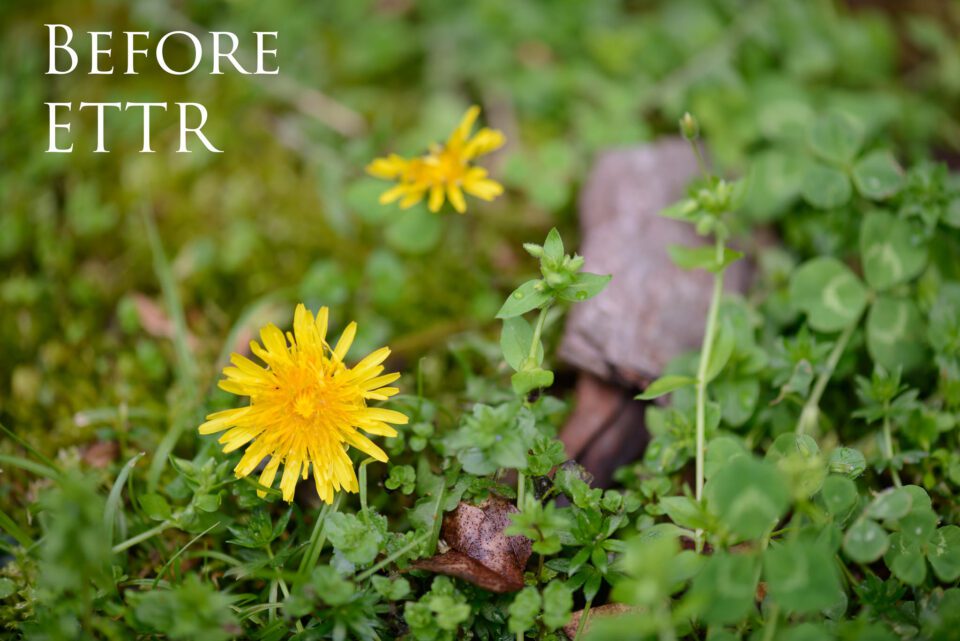

Now, when I reduce the second image’s exposure in Lightroom, the photos look essentially the same:

However, the second image has some more detail than the one on the left, at least in theory. With contrast, sharpening, and vibrance changes in Lightroom, the differences are visible in the crop below:


The above photos show why there is so much controversy behind ETTR. Yes, there are differences in the images above — the crop on the left is certainly noisier than the one on the right — but this is a 100% crop. If the images above are four inches (10 cm) wide on your screen, they would be crops from a six-foot wide print (about two meters).
In fact, the differences between the images are all but invisible on a print that is less than two feet wide. For many photographers, the image quality gains simply are not worth the hassle of exposing to the right.
Still, there are clear differences between the two exposures above. Photographers worry so much about capturing optimum data in the first place, and exposing to the right undeniably does improve the resulting image. In this scene, there was only a difference of 1.3 EV between the metered exposure and the ETTR exposure — in scenes where this difference is greater, the improvement from the ETTR shot will also be more obvious. And, if you ever print large or use an older-generation camera, these differences start to become more relevant.
3) Putting it into Practice
The hardest part about ETTR is that you must be careful to avoid exposing too far to the right. The danger is that you accidentally render an image’s highlights completely white (which means there is zero / no data there), even if you intend to shoot a darker exposure. And, although it is fairly easy to recover dark shadows in post-processing, it is nearly impossible to recover completely blown out highlights. This is what turns many people away from using ETTR, which is unfortunate. There are a few ways to determine the proper ETTR exposure and still avoid blowing out the highlights.
One way to do so is to look at the photo’s histogram when reviewing the image in-camera. Your goal is to take the brightest photo possible that does not push too far to the right of the histogram, as shown below.

Unfortunately, the histogram on your camera is not as accurate as it looks. Current cameras are incapable of showing the RAW histogram of an image, even if you shoot in RAW (which you should, if you use ETTR). Instead, the histogram is based on the processed JPEG image that is embedded into RAW files. This means that although the camera might indicate that you have pushed your exposure too far, there is potentially more headroom for recovery in post-processing.
There is truly no reason for camera companies to avoid implementing a RAW histogram option, which has been one of the most-requested features amongst landscape and studio professionals for more than a decade. At this point, it is truly absurd that photographers cannot judge their RAW histograms until loading their photos onto a computer (see Iliah Borg’s excellent article onculling RAW images vs JPEG). The first mainstream camera manufacturer to get this right will earn a lot of respect in my book.
Still, although the camera-generated histogram is not completely accurate, it does serve as a useful guide for what the proper ETTR exposure could be. And, as I describe later, there is one (albeit cumbersome) way to fix the inaccurate histogram issue.
4) ETTR Method One
One method of aiming for a proper ETTR image is to take a photo, then analyze its histogram in-camera. If none of the histogram is bunching up against the right, you can increase the exposure. Stop increasing the exposure once the histogram says that your highlights are blown-out to white, and you’re good.
Instead of a histogram, it is also possible to use so-called “blinkies” to judge your image’s exposure. With this option enabled, the pure-white areas of your photo will blink between white and another color — typically black or red, but it depends upon your camera.
Blinkies are easier to notice than a histogram, but they are a more limited method of judging your exposure because they only tell you one value: white. Blinkies are valuable, just not to the same extent as a histogram is. Plus, just like histograms, blinkies are based off the JPEG that is embedded in the RAW file, not the RAW data itself.
Using the JPEG embedded in a RAW file certainly isn’t the perfect method of judging exposure, whether you use a histogram or blinkies. Still, it is perhaps the easiest ETTR method to implement, since it requires almost no extra work. Plus, it still leads to a better exposure than blindly using thematrix meter without any compensation.
5) ETTR Method Two
The other method is a bit more complicated, and it requires that you do some testing. First, change your metering mode to spot metering, then find the brightest part of the scene that has to retain detail. If you test your camera beforehand, you will know the amount that you can increase exposure compensation by and still be able to recover information from this area in post-processing. For example, with my Nikon D800E, I can increase exposure at least by +2.3 EV above spot meter’s recommendation for the brightest part of the image.
If you use this method, you don’t need to rely on the less-than-accurate histogram in your camera, although it puts more weight on your personal ability to judge the brightest part of a scene.
The first step is to find how much brighter you can expose your image compared to the spot meter’s recommendation. Set the camera to manual mode and spot metering. Point the metering point on the brightest part of the scene, and record the exposure that the camera tells you to set. Then, take several photos, ranging from +1/3 EV to +4 EV. Open the images in your image editor, then darken them all to match the spot-metered exposure. Check the exposure compensation of the brightest photo that still retains highlight detail — with my D800E, it was +3 exposure compensation.
However, to give yourself some breathing room, you don’t want to choose the value that is right on the limit. It is best to decide on an exposure compensation that is -1/3 or -2/3 from the value you just found. In my case, I decided that a +2.3 exposure compensation is ideal.
To use ETTR from now on, shoot in manual mode with spot metering, permanently using the compensation that you just found. Scan your photo with the spot meter, and manually set the exposure to render the brightest area at what the camera says is 0 EV (since it is automatically factoring in your positive exposure compensation). Congratulations — your images are now exposed to the right.
6) Bracketing
Regardless of the method you choose, it is always a good idea to bracket your scene if you are exposing to the right. I recommend that you shoot one image that is 2/3 EV more than your standard ETTR exposure, and one that is 2/3 EV less. If you are implementing the second method of ETTR (assuming that your “standard” compensation is, like mine, +2.3 EV), your bracketed images would be +1.7, +2.3, and +3 EV.
It is important to have a lower exposure than your normal value, in case you accidentally exposed too far to the right. On the other hand, you may find that your +2/3 EV exposure did not blow out any highlights, and you can use it instead of your standard ETTR exposure.
7) ETTR with High-Contrast Scenes
A common misconception is that ETTR says a photographer should always use positive exposure compensation, meaning that the resulting photo is brighter than what the camera’s matrix meter says. In some cases, this is not the case. For example, see the image below:

NIKON D7000 + 17-55mm f/2.8 @ 17mm, ISO 100, 6/10, f/8.0
The extreme contrast in this scene fooled my camera’s matrix meter into suggesting a much brighter exposure than ideal. I took this image with a -2/3 exposure compensation, and some of the highlights are still blown out (especially along the left-hand side of the tree in the middle). Using ETTR with this image, I actually should have shot at one stop less than what the matrix meter recommended.
The lower a scene’s contrast, the more likely it becomes that your camera will recommend an exposure that is too dark — one that does not contain all the possible detail of an ETTR exposure. However, with a contrasty scene like the one above, your camera could do the opposite, recommending an exposure that is brighter than ideal.
8) What is UniWB?
As discussed above, the histogram that you see on the back of the camera is not technically accurate — often times, a highlight that your histogram shows as pure white can actually be recovered in post-processing. If you can’t trust the histogram, it becomes much more difficult to know if your ETTR exposure is ideal until you open the photo on your computer.
Compounding the issue, modern cameras have several “picture control” options for JPEG shooters (or “Picture Styles” for Canon cameras). Since the camera’s histogram is based off of the JPEG preview, each of the different picture controls will show a different histogram, even when you are shooting RAW. Plus, your white balance setting will also affect the histogram you see, even though the white balance setting does not affect a RAW file in a destructive way. The complicated part is that none of these histograms is actually the same as the RAW histogram — the one that you actually want to see.
In an effort to fix this dilemma, Iliah Borg created UniWB, or unity white balance. This white balance makes it easier to see an accurate histogram in-camera, but it creates its own set of problems along the way. To get an accurate RAW histogram, your only option is to load a UniWB on your camera and to implement a completely flat tone curve — in other words, settings with no contrast whatsoever.
The only issue with UniWB and a flat tone curve is that they make the image on the back of your screen look horribly green and completely free from contrast.
This problem is important for me, and many other photographers, because the image on the back of the screen is a crucial aspect of my shooting style. Especially while I am photographing landscapes, I pay special attention to the image on the camera’s screen, and I adjust my composition according to how the objects in the photo look. If everything on the screen is green and has no contrast, I cannot judge an image’s success until I see it on the computer. If your method is like mine, using UniWB and a flat tone curve are probably not good options for you.
However, if you do want to implement a UniWB and a flat tone curve, be warned that your camera is fighting against you. All of the “background” JPEG settings that normally make no difference suddenly become important, since they affect how your histogram appears.
For starters, you must choose the lowest-contrast profile within the camera. This means using the Picture Control / Picture Style “Neutral” (or “Flat” on some of the newest Nikon cameras). Then, you need to lower the contrast and saturation as much as possible. Set sharpening to zero, turn off any automatic corrections (especially vignetting control), and set your color space to AdobeRGB. Although RAW files do not inherently have a color space, AdobeRGB is better than sRGB at showing a more accurate histogram. Also, turn off that silly Active D-Lighting, if you still have it on — not only does it mess with the histogram, but it also affects the exposure your meter recommends (yes, even in RAW mode). All of the other special effect modes that your camera has should also be turned off as well, as always. None of these settings will matter once you import the file into a RAW editing program, but they still affect how the histogram appears on the camera screen.
That is actually the point of UniWB in the first place — setting a white balance that does not falsely affect the appearance of the histogram. If the white balance were too warm, for example, a resulting histogram could show the red channel as blown-out when it actually still contained usable information. The “exposure-neutral” white balance, UniWB, just so happens to look extremely green.
Again, if camera manufacturers implemented a simple RAW histogram feature (or, if it’s not too crazy to ask, a different metering mode for RAW exposures), none of this would be necessary to begin with. Until that day, though, we have to work with the tools we have. In this case, that means that we are stuck with clumsy workarounds until the camera manufacturers decide to fix this unnecessary issue.
On that same note, if you want the UniWB file specific to your camera, you need to find it online from a kind individual who has taken the time to create one. It would be nice if a camera manufacturer provided these files on their websites, but I guess that would be admitting that some people need to use RAW histograms in the first place.
For the record, I do not use UniWB or a flat tone curve — instead, I use one of the two other ETTR methods that I outlined above (generally method two). They aren’t the most scientifically accurate ways to expose to the right, but at least they don’t turn my camera screen green.
9) When to Avoid ETTR
In theory, ETTR works with every possible scene. There will always be a “best” exposure for an image — one which is as bright as possible without blowing out any of the highlights. However, in practice, this is not always true.
If you aren’t shooting at your camera’s base ISO, ETTR is all but useless. For example, you wouldn’t want to shoot a scene at ISO 1600 and then decrease the exposure by one stop in Lightroom — it’s just as good to shoot the scene at ISO 800 in the first place, and that is less likely to blow out the highlights in your image anyway. The added noise from ISO 1600 would cancel out any benefits that come from darkening the photo in post-processing.
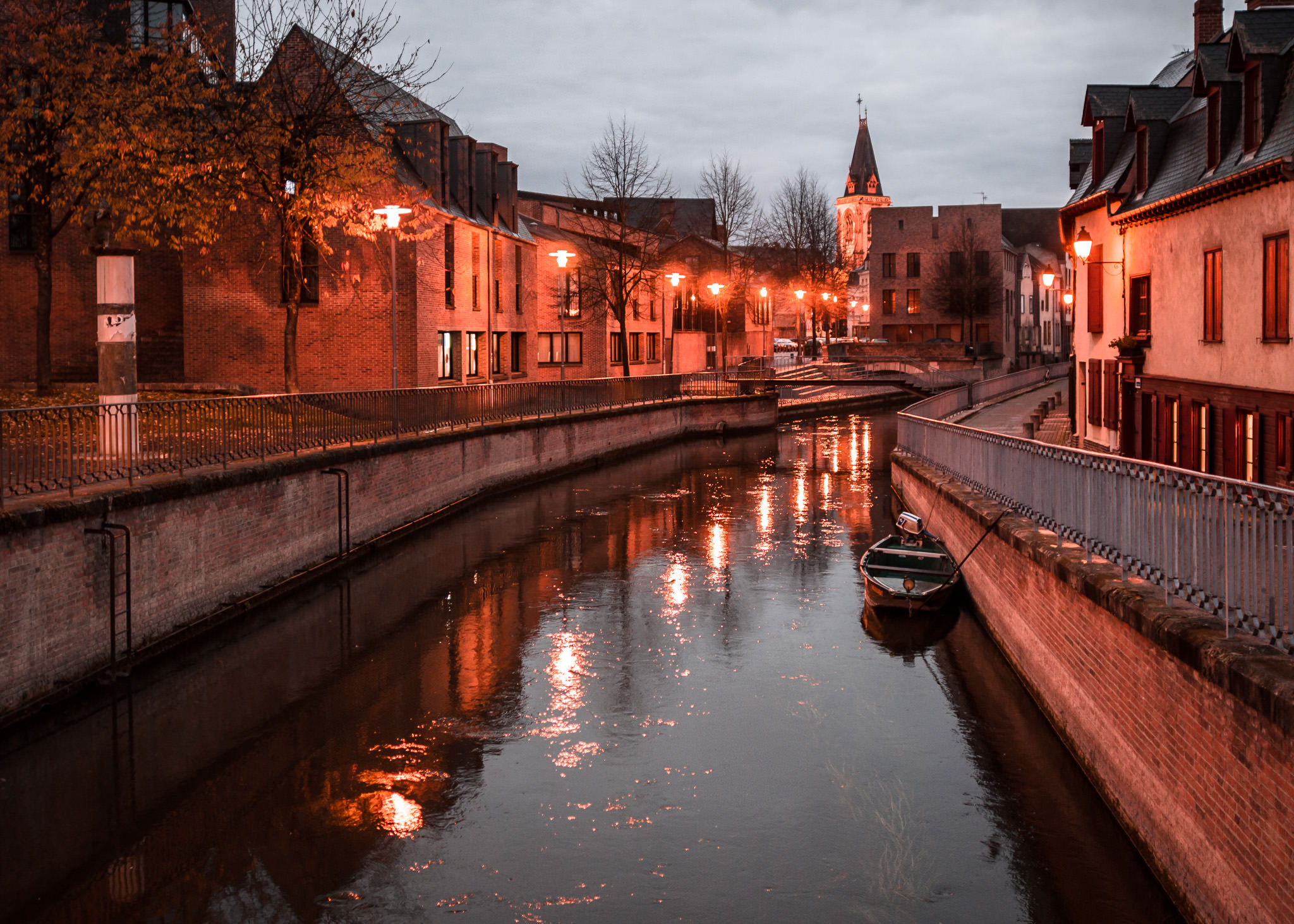
NIKON D7000 + 24mm f/1.4 @ 24mm, ISO 640, 1/50, f/1.4.
Similarly, ETTR is useless if it requires that you leave base ISO. For example, consider a windy landscape scene. Your metered exposure settings could be f/11, 1/2 second, and ISO 100 (base ISO), with no highlights in danger of blowing out to pure white. This scene may seem like the perfect candidate for increasing your exposure beyond the matrix meter’s recommendation, but that doesn’t work in this case. A longer shutter speed would blur moving objects, and a wider aperture would result in too shallow depth of field. So, to reach the suggested ETTR exposure, you would need to raise your ISO. Again, though, the increased noise from a higher ISO would cancel out the effects of darkening the exposure in Lightroom. In this case, it is better just to go with the metered exposure.
ETTR is also difficult to implement if you do not have much time to take the photo you want. For example, wildlife or wedding photographers may prefer a “safer” exposure — one that is darker than what ETTR recommends, but one that is less likely to blow out important highlights in the image. Sometimes this particular technique is referred to as “Exposing to the Left”, or “ETTL”. Although it is nice to have as much detail as possible in a photo, the small differences are not worth the possibility of missing a fleeting image in the first place.
Also, If you shoot JPEG, there is little benefit to using ETTR. Although you could see a decrease in the image’s noise, reducing a bright exposure in Lightroom has the potential to change colors around. Plus, JPEG files contain very little data compared to RAW by their nature (they are only 8-bit), so it is contradictory to use a technique like ETTR on an already-compromised image format.
It is also worth noting that you can sometimes go overboard on ETTR even if you do not blow any of the highlights. If you are shooting a very dark subject, for example, extreme brightness changes in Lightroom can shift the colors of the image somewhat. Still, these color changes are generally negligible and they should not deter you from using ETTR (from what I understand, this has more to do with the RAW converter than with the image data itself).
10) Is it Worth It?
With the extreme dynamic range capabilities of modern sensors, as well as a much lower amount of noise at base ISO, the value of ETTR is coming under scrutiny in the photographic community. Since it is so easy to recover shadows with modern cameras, isn’t it better to go with a “safer” exposure that is less likely to blow out the highlights? In many cases, yes. It is no longer an issue to increase an image’s brightness in post-processing by one or two stops, and few people print large enough to notice a substantial difference anyways.
Yet, as photographers, we strive to take the highest-quality images possible. We want our RAW files to contain as much data as they can, giving us more legroom to recover data in post-processing. If you are a landscape or studio photographer, especially, you should have enough time to bracket your photos in an attempt to get the ideal ETTR exposure. And if you have the time to implement ETTR, why not do so?
As a final note, it is worth mentioning that some photographers take the idea of ETTR too far, subconsciously putting its importance above the composition of the image itself. Exposing to the right can be a valuable tool for many photographers, but its benefits are only meaningful if the photo is already successful in every other way — composition, lighting, optimal focus, and so on. I am sure you have seen your share of photographers always taking 3 or more exposures (even when light is too flat or there is nothing interesting to photograph), ending up with a lot of wasted memory and too many images to even bother working with later.
As such, it is important to know when and how to use ETTR. If you get your shot set up and you have optimized everything else in your image, ETTR is valuable because it lets you squeeze the last little bit of image quality from a scene. For many photographers, that benefit alone outweighs the drawbacks of exposing to the right.
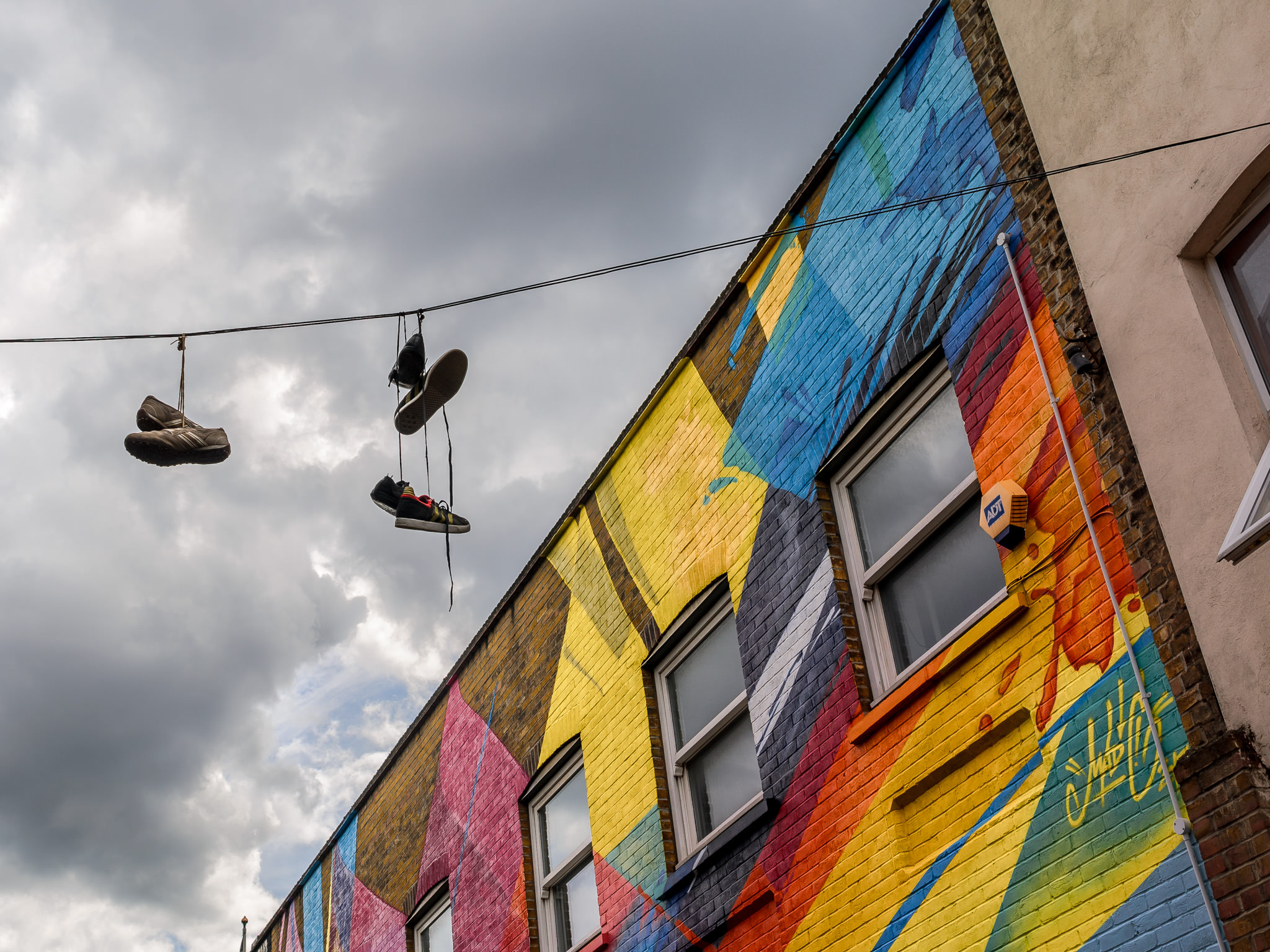
NIKON D7000 + 24mm f/1.4 @ 24mm, ISO 100, 1/320, f/7.1
Singapore's new Parliament opens on Jan 15: 5 things to watch
Singapore's new Parliament opens on Jan 15: 5 things to watchSingapore's new Parliament opens on Jan 15: 5 things to watch
SINGAPORE - The first session of Singapore’s 13th Parliament opens on Jan 15, with the swearing-in of 89 elected Members of Parliament and two Non-Constituency Members of Parliament (NCMPs).President Tony Tan Keng Yam will address the House after that, in a speech that sets the policy directions of the Government and outlines its goals for the new five-year term.
MPs will then debate the speech over five days at the end of the month. About a quarter of the 89 elected MPs are new and this will be a first opportunity to make an impression in the House.
Here are five things to look out for in the new Parliament:
1. First female Leader of the House

Ms Fu, who assumed the role on Oct 1, 2015, will be assisted by Senior Minister of State for Home Affairs and National Development Desmond Lee, who is the Deputy Leader of the House.
As Leader, she will arrange Government business in Parliament and decide on the legislative programme. She will also have to advise the House on what action to take on procedural matters, such as whether to extend the times of sittings, and when a difficulty arises, such as when an MP breaks a House rule.
2. Two parties in Parliament

After more than 30 years of having at least three parties in the House, this will be the first Parliament for some time now to have only two parties represented: the ruling People’s Action Party (PAP), and the opposition Workers’ Party (WP) with its six elected MPs and two NCMPs.
None of the other opposition parties did well enough at the Sept 11, 2015, general election to have representatives eligible for Parliament. This includes the Singapore People’s Party’s Lina Chiam, who was an NCMP in the previous Parliament.
Not since the 5th Parliament, which was dissolved on Dec 3, 1984, has there been only one opposition party in Parliament.
3. Third Non-Constituency MP seat: Parliament to decide

Ms Lee Li Lian, also of the WP, was the third declared as an NCMP. But she announced after losing the contest in Punggol East that she would not take up the NCMP offer.
NCMP seats are offered to the best losers at the polls and the law says that at any general election, the number of NCMPs “shall be nine less the number of opposition MPs elected”.
If Ms Lee does not take the Oath of Allegiance at the first or second sitting of Parliament, her seat does not automatically go to the next best losing candidate which, going by the election results, would also be from the WP.
This is because Parliament is not obliged to declare that the seat be filled by the next succeeding candidate.
An MP will have to file a motion to declare the seat vacant and have it filled by the next candidate.
4. Fourth-generation leaders

This was a much touted phrase during the Sept 11 general election, with both the PAP and the WP urging voters to send their next-generation leaders into Parliament. Both parties succeeded, in a sense, and it is now up to the representatives to prove themselves in the House.
The PAP had the bulk of its fourth-generation team in place after the 2011 general election, and got to complete the team with those elected at the 2015 polls. Political watchers and analysts identify the next core group as comprising Finance Minister Heng Swee Keat, Minister in the Prime Minister’s Office Chan Chun Sing, Minister for Social and Family Development Tan Chuan-Jin, Minister for National Development Lawrence Wong and Acting Ministers for Education Ng Chee Meng and Ong Ye Kung.
The WP, too, managed to get some of its younger leaders into Parliament, via the NCMP scheme. Lawyer Dennis Tan, the party’s candidate in Fengshan, and consultancy firm chief executive Leon Perera, who was part of the party’s East Coast GRC team, were both identified as being part of the core of the opposition party’s next-generation leadership.
5. New batch of Nominated MPs
One of Parliament’s early tasks will be to also prepare for a new group of Nominated MPs (NMPs).The previous batch of nine NMPs had their 2 1/2-year term cut short, when Parliament was dissolved in August last year ahead of the election. By then, they had served only about a year of their term.
Still, that was much longer than the shortest NMP term on record – a fortnight – when Parliament was dissolved for the polls in 2001.
Some from the last batch have already expressed interest in serving another term. Typically, NMPs are nominated by members of the public and seven functional groups representing organisations from different sectors of society. A Special Select Committee made up of MPs then goes through the list of applicants and submits their picks to the President, who makes the appointment.
HDB resale price index up by 0.1% in fourth quarter of 2015
HDB resale price index up by 0.1% in fourth quarter of 2015
SINGAPORE - The Resale Price Index (RPI) for the fourth quarter of last year (2015) was 134.8, up by 0.1 per cent from the previous quarter, data released by the Housing Board on Friday showed.
The RPI, which provides information on the general price movements in the resale public housing market, for the full year of 2015 registered a decline of 1.6 per cent.Resale transactions increased by 2 per cent, from 4,893 cases in the third quarter to 4,992 cases in the fourth quarter last year.
The number of resale transactions for the entire 2015 was 19,306, an increase of 11.5 per cent compared to 2014.
The number of applications approved for subletting of HDB flats increased by 6 per cent from 10,018 cases in the third quarter to 10,618 cases in the fourth quarter last year.
This year, HDB plans to offer about 18,000 Build-To-Order (BTO) flats across four exercises. These flats will be spread across various locations.
The first BTO exercise will be held in February where about 4,150 flats in Bidadari, Bukit Batok and Sengkang will be offered.
The Indian People - Cultures of the World
The Indian People - Cultures of the World
Actually more of a heterogeneous collection of beliefs, peoples, and traditions, the culture of India is united in its variety.

Description
Indian culture is often considered as a collective from a shared group of distinct cultures that had originated in the Indian subcontinent in close connection with one another, rather than as a homogeneous cultural tradition. The origins of these cultures, which developed in the riverine plains of what are today the independent countries of India, Pakistan, Bangladesh, and Nepal date back to as far as the 2nd Millennium BC. Today, the diaspora of peoples of Indian ancestry is to be found spanning across all corners of the world.Language and the Arts
The ancient Indian classical language, called Sanskrit, was one of the earliest Indo-European languages to be developed. The epics of Mahabharata, Ramayana, the classical plays written by the court poets of early first millennium AD, the grammatical treatises of Panini, as well as countless works of lyrical poetry, tracts on statecraft and the performing arts, and also what was perhaps the world's first sex manual (the 'Kama Sutra') were all written in Sanskrit. The modern Indian languages, such as Hindi, Bengali, Tamil, Urdu, and Manipuri, each have their own unique and significant literary traditions which go back for many centuries as well. The census of India 2001 notes India has 122 'Major' languages, in addition to 1599 'Other' languages.India has one of the earliest scholastic traditions of systematic study of performing arts. Natyasastra, a 2,000-year-old Sanskrit text, describes five systems of classifying musical instruments. The oldest preserved examples of Indian music are the melodies of the Samaveda, written in the early years of the first millennium BC. The intricate 'frescoes', murals found in the various ancient structures down the length and breadth of the country, testify to the superb technical expertise of the sculptors and artisans of India through the years.
Philosophy and Religion
Numerous significant religious traditions that developed within India have become globally important today. These include Hinduism, Buddhism, Jainism, Sikhism. Meanwhile, Christianity and Islam, with their Middle Eastern origins, have deeply influenced the development of Indian cultural practices. In fact, both of these foreign religious traditions have been extensively practiced in the region for many centuries now. As such, they can scarcely be considered as being less integral than the indigenous religious traditions of the subcontinent to the culture as a whole.Numerous philosophical traditions had developed in India. Notably, the 6 schools of Vedic philosophy and 4 schools of 'Heterodox' philosophy, of which the most reputed is Buddhism, are included among them. India has a very ancient tradition of atheistic thought as well. One of the most famous of these is the materialistic philosophical school called Carvaka, which was developed in the 6th Century BC.
Indian Cuisine
The cuisine of India varies considerably across its various regions and ethnic communities. Some significant culinary traditions are the Mughlai, Rajasthani, and Kashmiri cuisine in the north. Wheat-based bread is the main staple in the north and west of the country, while rice predominates as the main starch in the south and east. Udupi and Chettinad cuisine are specialities of the south. Eastern India is noted for comparatively more non-vegetarian dishes, especially those incorporating freshwater fishes. In fact, every constituent state of the Republic of India has its own distinct culinary practices, and many share a lot in common with the foods of the neighbouring countries of Nepal, Pakistan, and Bangladesh. To illustrate the situation, the food of West Bengal and Assam is more akin to the food of Bangladesh than to the food of North or South India. Similarly, Kashmiri food has more affinity with dishes in Pakistan and Iran than it does to cuisine from other parts of India.India has an elaborate range of variation when it comes to milk-based desserts. The region is not very well known for having much of a 'cheese culture', but a particular sweet cream preparation, called 'Kheer', has been venerated through generations. Bengal and Uttar Pradesh, on the other hand, are famous for their specialty 'sweetmeat' preparations. Due to religious taboos, alcohol production in India is not so widely prominent as are other features of its cuisine. However, almost all regions have their own particularly local alcoholic varieties, such as Mahua of Bengal, Chhang of Meghalaya, and Bhaang of Northern India. India has the largest population of vegetarian nationals in the world, and a number of culinary traditions have developed which pride themselves in their strictly vegetarian status. These include the Udupi cuisine of the western coast of South India, and the Jain food of Northwestern India.
State of the Culture
Indian culture can in no way be termed as a culture in threat. In fact, in spite of its heterogeneity, it is one of the most aggressively expanding and dominant cultures in all of South Asia. However, many threats lie from within, and the very heterogeneity of Indian culture is at stake by the rise of certain majoritarian fascist forces, who desire to introduce and dictate a certain monolithic variety of Indian cultural practices. The rise of an ultra-traditionalist, right-wing Hindu organization. called the 'Sangh Parivar', in the early 1990s placed the proverbial diversity and tolerance among Indian culture under great threat. Among a host of sensationalist agenda items, some of their most significantly ambitious programs include efforts to convert all non-Hindu Indian citizens to Hinduism, to conquer and institute a 'reunited' mythical India, and banning any text or cultural production that they deem to be against Hinduism. Such projects are against the ethos of Hinduism or Indian culture per se, as Hinduism had never traditionally been a unified and rigidly bounded religion, but rather signified a shared spiritual pantheon.The Best Governments in the World
The Best Governments in the World
Switzerland and New Zealand have the best governments globally, followed closely by European countries and by Canada.

Europe Leads the Way
European countries top the list of Best Governments in the World, the majority of whom are governed by an EU- and UN-affiliated leadership. The top ten countries with the best government according to the Legatum Index Government Ranking are Switzerland, New Zealand, Denmark, Sweden, Finland, Luxembourg, Canada, Norway, United Kingdom and Australia. The United States ranks 11th which incidentally is the same ranking that it has for the same institute’s most prosperous countries list.In the democratic Swiss State, the people have the foremost political power, giving them increased opportunities to express their opinion by way of popular voting. All its people have the right to vote, including both men and women, and they have the freedom to choose the people who will represent them within their Federal Assembly. The Kingdom of Denmark, on the other hand, is a constitutional monarchy. Therein, their monarch, currently Queen Margrethe II, is the Head of State. The Prime Minister, meanwhile, presides over the government's Cabinet, where the most important executive powers are carried out.
In the country of Sweden, the National Cabinet is the supreme executive authority. They too have a Prime Minister, who is typically assigned by cabinet ministers, and someone called the Speaker of the Riksdag heading the Swedish unicameral national legislature. Legislative power lies with the Parliament in Finland, whereas Luxembourg has their own brand of Parliamentary Democracy. Meanwhile, Norway has its Monarchy, the UK its Constitutional Monarchy, and finally Australia its Commonwealth government akin to those of New Zealand and Canada's Federal forms of governance under the British crown.
Among the factors that have allowed Switzerland to top the rankings for best governments in the world are their excellent health care system, top notch educational programs, low levels of air and water pollution, freedom of speech, the right to responsibly defend oneself, a priority given to innovation, and a stable economic environment. These factors are also those being commonly shared by the other countries topping the best government ranking, such as Denmark, Sweden, Finland, Canada, Norway, the United Kingdom and Australia.
The Importance of Good Governance to Nations as a Whole
Good governance remains among the benchmarks against which all nations, rich and poor, are often ranked. It is interesting to note that the countries ranked as having the best governments in the world also received similar or closely similar rankings for other lists such as Most Prosperous Countries of the World, the World’s Happiest People, the Most Globally Competitive Countries, the World’s Most Satisfied People, and so on. The fact of the matter remains that it would appear that no matter how powerful or progressive or wealthy a nation may be, good governance will play an important role when considering how successful a nation is across all aspects of life therein. As a point in fact, though the United States currently claims to have one of the world’s largest economies, it only ranks 11th in both the Best Governance list and the Best Countries to Live In list. Another market giant, China, has even more disparity. Despite having the 3rd best Economy ranking, it is ranked as 52nd all around, and 67th in Governance. Indeed, "Prosperity" itself extends far beyond dollars and cents and economic leverage, with happiness and good leadership being just as, if not even more, important.- View information as a:
- List
- Chart
Attacks on Cyber Security: The Global Leaders in Cyber Crime Damages
Attacks on Cyber Security: The Global Leaders in Cyber Crime Damages
Just as the
Internet has opened up new frontiers in business and media, it has
proffered opportunities and incentives for new forms of crime. We look
at the economies incurring the most in financial damages directly
resulting from cyber crime activities.

Cost to Businesses
Per the statistics acquired by the Ponemon Institute research study, leading businesses based in the United States of America have, on average, lost more money to cyber crimes than anywhere else in the world. The research suggests that leading U.S.-based businesses have lost around $15.42 million USD to cybercrimes on average per attack. Following in a distant second we see Germany, where leading businesses have lost $7.5 million USD in instances of cyber crimes on average. Apart from that, the research study has mentioned countries like Japan, the United Kingdom and Brazil as well, where leading businesses have lost approximately $6.81 million, $6.32 million and $3.8 million, respectively, per cyber crime attack on average. The countries rounding out the top 7 listed were Australia and Russia, where businesses are believed to be losing around $3.47 million and $2.37 million, respectively.Can Businesses Put an End to their Cyber Security Woes?
Cyber crimes are a rampant problem increasingly affecting businesses all around the world. The Ponemon Institute’s initiative to quantitatively analyze this worrisome problem has provided us with some truly shocking results. What is apparent through this research study is that leading businesses in countries like the U.S., Germany, Russia and the United Kingdom alike have lost millions upon millions of dollars to such crime. For this reason, we need to incorporate newly emerging technologies to fight cyber crimes and safeguard businesses, just as cyber criminals are utilizing them to carry out their vices. With so much money lost, it’s evident that companies need strong IT divisions and security ready to take action against cyber crime and mitigate its financial effects. Furthermore, many national governments are increasing their efforts to make cyber criminals more liable in their legal systems.Average Costs of Cyber Crime per Attack in Millions of US Dollars
- View information as a:
- List
- Chart
| Rank | Country | US Dollars (millions) |
|---|---|---|
| 1 | United States | 15.42 |
| 2 | Germany | 7.50 |
| 3 | Japan | 6.81 |
| 4 | United Kingdom | 6.32 |
| 5 | Brazil | 3.85 |
| 6 | Australia | 3.47 |
| 7 | Russia | 2.37 |
Subscribe to:
Posts (Atom)
COMMUNISM FREDOM FOR WOMEN
COMMUNISM IS FREEDOM FOR WOMEN స్త్రీలను నిర్బంధించి, సంఘటితం చేసే పెట్టుబడిదారీ సమాజాలకు భిన్నంగా, కమ్యూనిజం స్త్రీ పురుషుల సమానత్వాన్ని ...

-
Exposing to the Right Explained Exposing to the right, or ETTR, is an approach to photography that is as helpful as it is controversi...
-
 How to Focus in Macro Photography If you’re trying to photograph the small world of plants and bugs, you’ll face plenty of challeng...
